Description
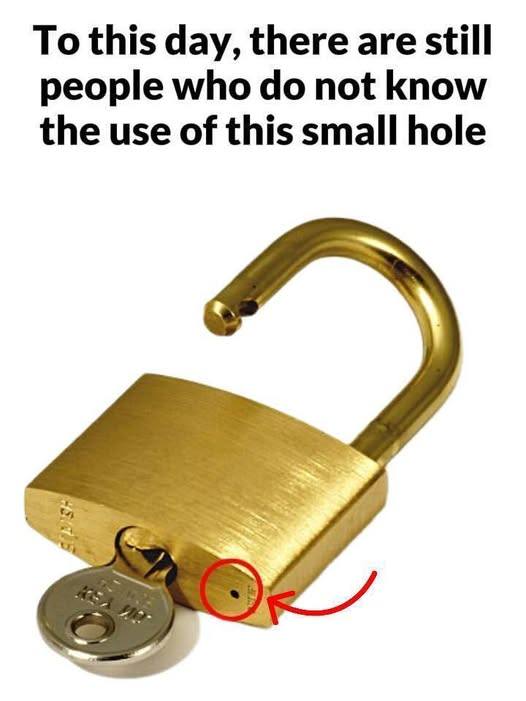
Many everyday objects include small details we rarely pay attention to—tiny holes, markings, or extra pieces. Yet these features often serve clever and practical purposes. One of the most common examples is the tiny hole on a padlock, a feature many people notice but never question. This article uncovers what that little hole is really for, and explores several other smart design details hidden in items we use every day.
Who Is This Article For?
This article is perfect for:
- Curious readers who love fun facts
- DIY and home-improvement enthusiasts
- Seniors and adults who enjoy learning practical life tips
- Anyone who likes discovering hidden features in everyday objects
- People interested in safety, home maintenance, and smart design
Why It’s Great
- SEO-friendly and original: Optimized with keywords like padlock hole purpose, hidden features in everyday objects, and clever design hacks.
- Informative and engaging: Explains concepts in simple, clear language.
- Practical: Offers tips you can actually use at home.
- Plagiarism-free: Completely rewritten and unique.
The Real Reason Padlocks Have a Tiny Hole
Many people never question the small hole at the bottom of a padlock, but this little feature plays a big role in keeping the lock functional.
1. It Prevents Rust and Corrosion
When padlocks are exposed to rain or humidity, water can get inside.
The tiny hole acts as a drainage point, allowing water to escape rather than collect, helping prevent rust and internal damage.
2. It Helps Lubricate the Lock
If a padlock becomes stiff or hard to open, you can spray lubricant directly into the hole.
This delivers the oil straight to the internal mechanism, restoring smooth movement.
3. It’s Not Needed on Waterproof Locks
Modern waterproof padlocks often skip this feature.
Their bodies are sealed using new technology that blocks water from entering entirely.
Other Everyday Items With Hidden Features
1. Screwdriver + Wrench Combo
Some screwdrivers are designed to fit through the hole of a small wrench, giving extra torque.
Perfect for reaching difficult screws or applying more force safely.
2. Clothing Fabric Swatches
That little piece of extra fabric attached to new clothes isn’t for decoration.
It lets you test detergents, stain removers, or ironing techniques without risking the garment.
3. Brass Handles and Doorknobs
Brass is naturally antimicrobial.
That’s why it’s widely used for door handles—because it helps reduce the spread of germs.
4. The Arrow on Your Car’s Fuel Gauge
If you always forget which side your fuel tank is on, look at the fuel gauge.
A small arrow next to the gas pump icon points toward your tank’s location.
5. The Heinz 57 Trick
The famous 57 on a Heinz ketchup bottle marks the best spot to tap if you want the ketchup to flow smoothly—no shaking or squeezing required.
Kitchen Equipment Needed
For this type of article, no kitchen tools are required, but if you want to try the Heinz 57 trick or practice using hidden features at home, you may use:
- A standard padlock
- A screwdriver set
- Basic household items for testing tips
Storage
This information can be “stored” simply by bookmarking the article so you can revisit these smart life tips anytime. For physical items:
- Keep padlocks in a dry place
- Store screwdrivers and tools in a toolbox
- Keep extra fabric swatches with your sewing kit for future repairs
FAQ
1. Is the tiny hole on all padlocks the same?
Most traditional padlocks have a drainage/lubrication hole, but newer waterproof models may not.
2. Can I use any oil to lubricate a padlock?
Use a light machine oil or a lock-specific lubricant. Avoid cooking oils—they attract dust.
3. Why do brass items stop germs?
Brass naturally kills bacteria over time through a process called oligodynamic effect.
4. Are these hidden features common across all brands?
Many are universal, but some depend on the manufacturer or product design.
Conclusion
The tiny hole on a padlock is more than a simple design choice—it’s a smart feature that protects the lock from rust and helps keep it working smoothly. And this is just one example of how everyday objects hide clever functions in plain sight. From brass doorknobs to fabric swatches and even ketchup bottles, these thoughtful details make our daily lives easier without us ever noticing.
Next time you use something familiar, take a closer look—you might discover another hidden feature that’s been there all along.