Description
The question of whether pasta should be rinsed after cooking sparks more arguments than you might expect. Some cooks insist rinsing is essential for clean, non-sticky noodles, while others believe it ruins the texture and flavor of the dish. This guide breaks down the science, the cooking techniques, and the best practices so you can finally decide what’s right for your kitchen.
Who Is This Recipe (or Guide) For?
This article is perfect for:
- Home cooks who want to improve their pasta dishes
- Beginners learning proper cooking techniques
- Anyone confused about whether rinsing pasta is necessary
- People who often deal with sticky, gummy noodles
- Couples who disagree about “the right way” to cook pasta
If you’ve ever wondered whether skipping a rinse makes pasta unsafe or unappetizing, this guide has your answer.
Why It’s Great
This rewritten article gives you:
- Scientific explanations about starch and texture
- Clear comparisons of rinsed vs. unrinsed pasta
- Practical cooking tips for both hot and cold dishes
- Simple solutions if your pasta sticks together
- SEO-friendly content ideal for blogs, food websites, and cooking guides
The Debate: Should You Rinse Pasta After Cooking?
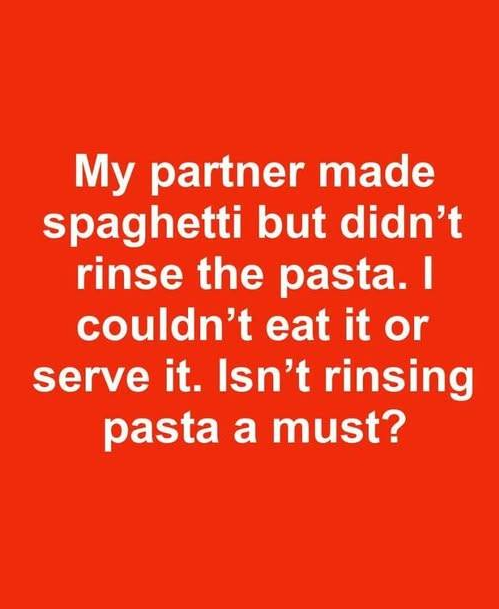
Many people grow up with the belief that rinsing pasta is mandatory. In your case, your partner served noodles without rinsing them, and that made you feel the dish wasn’t suitable to eat. But is rinsing actually required?
Surprisingly, opinions differ worldwide. Some cooks wash pasta to eliminate stickiness, while others argue that rinsing removes the very starch needed for a creamy, flavorful final result.
To understand this debate, we need to start with one key ingredient: starch.
Understanding Starch: Why Pasta Gets Sticky
Pasta is made from flour and water. When it boils, starch molecules loosen and dissolve into the cooking water. As the pasta cools even slightly, the surface starch becomes tacky and causes the noodles to cling together.
Why Some Cooks Rinse Pasta
- Removes excess starch
- Prevents clumping
- Creates a cleaner, smoother texture
This is especially helpful when making cold pasta dishes or when you want the noodles completely separated.
Why Starch Matters for Sauce Absorption
The starch on hot pasta helps sauces cling to the noodles—something highly valued in Italian cooking.
If You Don’t Rinse the Pasta
- The starch thickens the sauce naturally
- Sauces stick better to the noodles
- Pasta and sauce blend into a silky, cohesive dish
If You Do Rinse the Pasta
- You remove the sticky starch layer
- The pasta becomes less heavy and more neutral
- It’s ideal for cold salads or when you need noodles to cool quickly
Both methods can be correct—depending on the recipe.
The Science of Cooking Pasta Properly
Before rinsing becomes a question, your cooking technique already determines the texture.
Use Lots of Water:
A big pot helps pasta move freely and cook evenly.
Salt the Water Generously:
Salt seasons the noodles from the inside. Aim for 1–2 tablespoons per gallon of water.
Cook to Al Dente:
This prevents mushiness and keeps the pasta firm enough to hold sauce.
For hot dishes, pasta should go directly into the sauce so everything combines smoothly.
When You Should—and Should Not—Rinse Pasta
| Dish Type | Rinse? | Why |
|---|---|---|
| Hot pasta dishes (marinara, Alfredo, carbonara) | No | Starch helps the sauce stick and improves texture |
| Pasta salads (cold dishes) | Yes | Rinsing cools noodles and prevents clumping |
| Asian-style stir-fried noodles | Yes | A rinse removes starch and stops sticking in a hot pan |
In Italy, pasta is almost never rinsed—because starch is considered an essential component of the dish.
If Your Unrinsed Pasta Gets Sticky
No need to throw anything away. You can fix it easily:
- Add sauce while pasta is still hot
- Mix in a little butter or olive oil to loosen strands
- Give a quick rinse only if the pasta cooled too much and clumped
Kitchen Equipment Needed
For best pasta results, you only need a few basics:
- Large stockpot
- Colander or strainer
- Wooden spoon or pasta fork
- Measuring spoons for salt
- Saucepan for sauces
Storage
- Cooked pasta (no sauce): Refrigerate up to 3–5 days. Toss with a small amount of oil to prevent sticking.
- Cooked pasta with sauce: Store in an airtight container for 3–4 days.
- Freezing: You can freeze cooked pasta, but it may soften when reheated. Best for casseroles and baked dishes.
FAQ
1. Is rinsing pasta mandatory?
No. Rinsing is optional and depends on the type of dish you’re making.
2. Does unrinsed pasta taste different?
Unrinsed pasta may feel heavier and stickier, but it also binds better with sauce.
3. Is it unsafe to eat unrinsed pasta?
Not at all. It’s completely safe—this is only a matter of texture and preference.
4. Why do Italians never rinse pasta?
Because starch is essential for creating a creamy, cohesive sauce.
5. Should gluten-free pasta be rinsed?
Yes, most gluten-free varieties benefit from rinsing because they release more starch.
Conclusion
Whether or not you rinse pasta isn’t about right or wrong—it’s about choosing the method that best fits your dish. Hot, saucy meals benefit from unrinsed noodles because starch enhances flavor and texture. Cold salads and stir-fry dishes turn out better when the pasta is rinsed and cooled.
By understanding how starch works and choosing your steps intentionally, you’ll always end up with perfectly cooked pasta—no arguments required.